
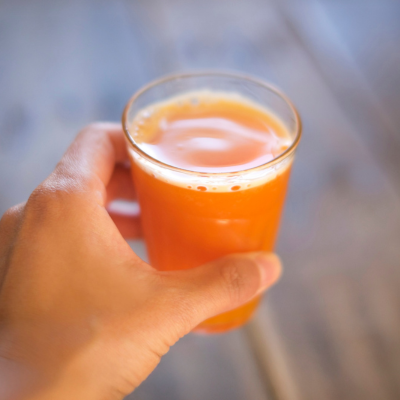
A closeup of a hand holding a glass of juice, highlighting how juice affects teeth.
At Beach Kids Dentistry in Virginia Beach, we know parents want the best for their children — including offering healthy drinks. Juice often seems like a good choice because it comes from fruit. But when it comes to your child’s teeth, understanding how juice affects teeth is crucial.
What Juice Does to Young Teeth
Juice, even 100 % fruit juice, is high in natural sugars. When your child drinks juice, these sugars mix with the bacteria in their mouth. The bacteria feed on the sugar and produce acid, which attacks the enamel — the protective outer layer of the tooth. Over time, this can lead to cavities. Learning how juice affects teeth helps parents see why moderation is key.
Many fruit juices are also naturally acidic, like orange or grape juice. This acidity can erode enamel independently of sugar, which means children’s teeth can become soft and more vulnerable to decay. Understanding how juice affects teeth in terms of both sugar and acidity is essential for long-term dental health.
Why Frequency & Timing Matter
The frequency and timing of juice consumption play a big role in how juice affects teeth. If children sip juice constantly throughout the day, their teeth are continuously exposed to sugar and acid. This repeated exposure significantly increases the risk of cavities.
Serving juice only during meals can reduce this risk. Learning how juice affects teeth helps families understand that occasional consumption is safer than constant sipping.
Smarter Drink Choices for Children
To protect young smiles, consider alternatives that minimize how juice affects teeth:
- Water: sugar-free, non-acidic and helps rinse away bacteria.
- Plain milk: offers nutrition without damaging enamel.
If you do give juice, it should be an occasional treat. Serving it at mealtimes and not allowing prolonged sipping reduces the negative impact and teaches children healthier habits. This approach helps parents grasp how juice affects teeth while still enjoying juice responsibly.
Whole fruits are even better than juice. Chewing stimulates saliva, which protects teeth naturally. Offering whole fruit instead of juice also limits exposure to sugar and acid, which is central to understanding how juice affects teeth.
Juice Isn’t a Necessity
Many parents assume juice is essential for vitamins and fruit intake. From a dental perspective, however, juice isn’t necessary. Choosing water and milk instead of juice reduces risk and minimizes how juice affects teeth over time.
Experts in pediatric oral health advise avoiding juice as a daily habit and instead treating it as an occasional beverage. Limiting exposure is one of the most effective ways to mitigate how juice affects teeth.
Smart Sipping = Healthy Smiles
At Beach Kids Dentistry in Virginia Beach, we encourage families to practice “smart sipping.” By limiting juice, encouraging water and milk, and offering whole fruits, parents can dramatically reduce the risks of cavities and enamel erosion while still letting children enjoy juice safely. Knowing how juice affects teeth empowers families to make the best choices for their children’s smiles.
Small habits, like serving juice only at mealtime and reducing overall consumption, can protect young enamel and prevent cavities. Understanding how juice affects teeth guides parents in forming routines that maintain a lifetime of healthy smiles.
Request Your Child’s Appointment in Virginia Beach, VA Today
If you want to learn more about how juice affects teeth or get personalized tips for your child, our team at Beach Kids Dentistry is here to help. Together, we can make sure your child enjoys both delicious drinks and a bright, healthy smile. By making informed choices about drinks, parents can confidently manage how juice affects teeth and foster positive dental habits for life. Request your child’s appointment today.